BUZZER
Year: 2022
Team size: 5
Engine: Unity
Development: 8 Months
Role: Game Designer | Concept Artist | 3D Artist | UI/UX Designer
Software: Maya | Blender | Photoshop | Illustrator
Overview
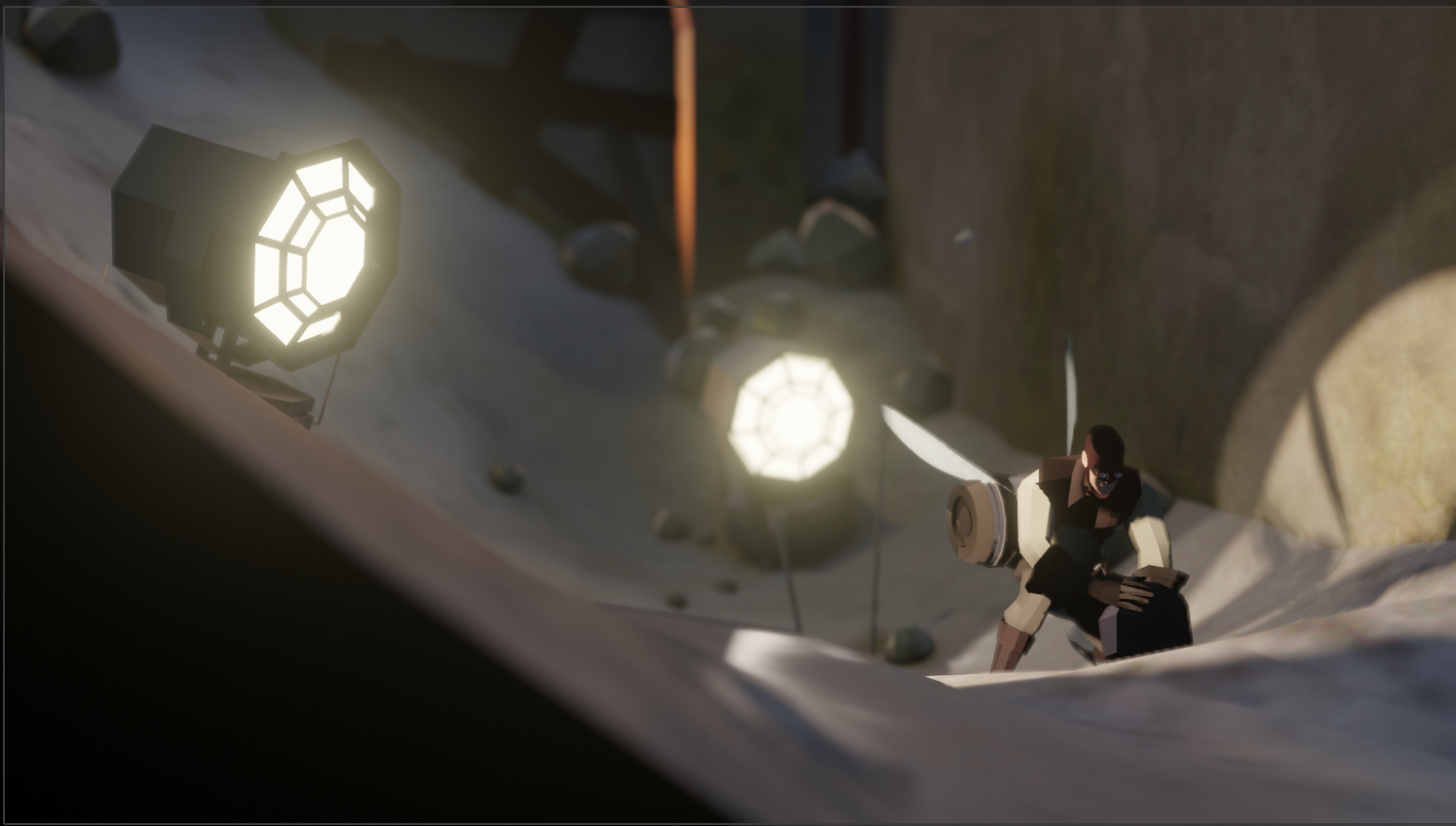
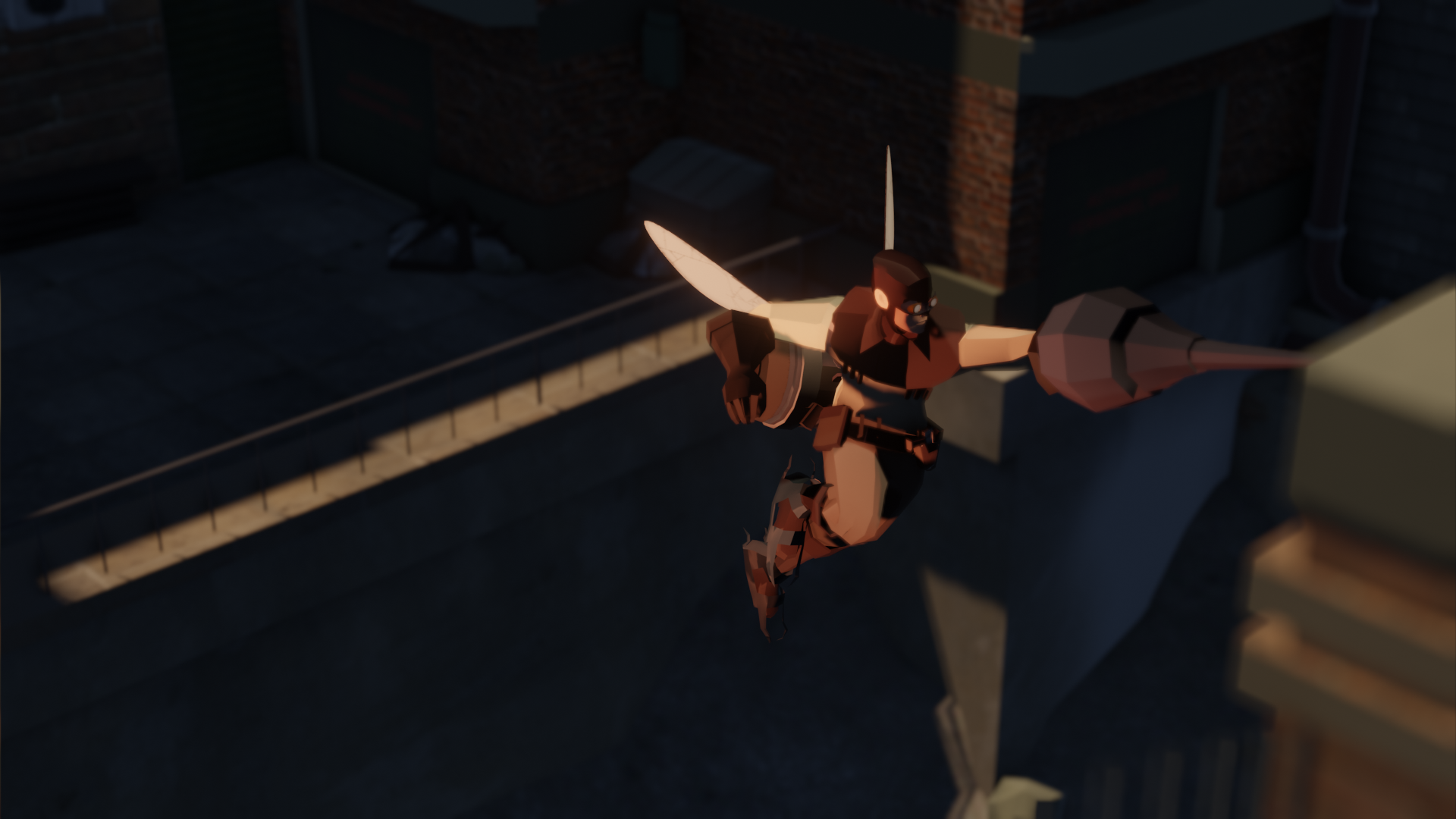
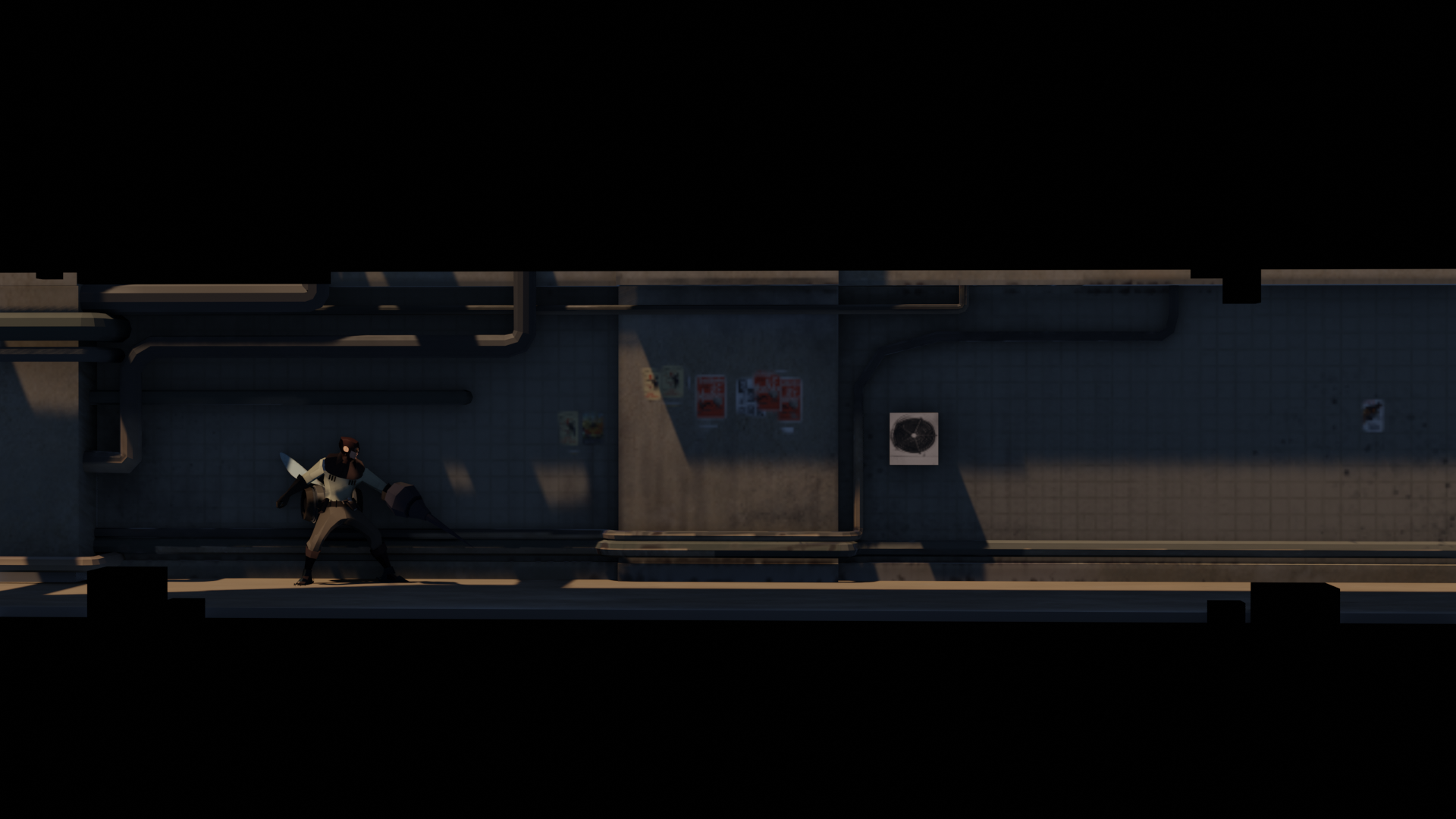
BUZZER is a 3D side scrolling action game developed in Unity for my university graduation project.
Created by a five person team over eight months, the project was selected for exhibition at the National Student Exhibition in Taiwan.
As the project's Game Designer and Artist, I focused on gameplay design, concept development, and establishing the game's visual identity.
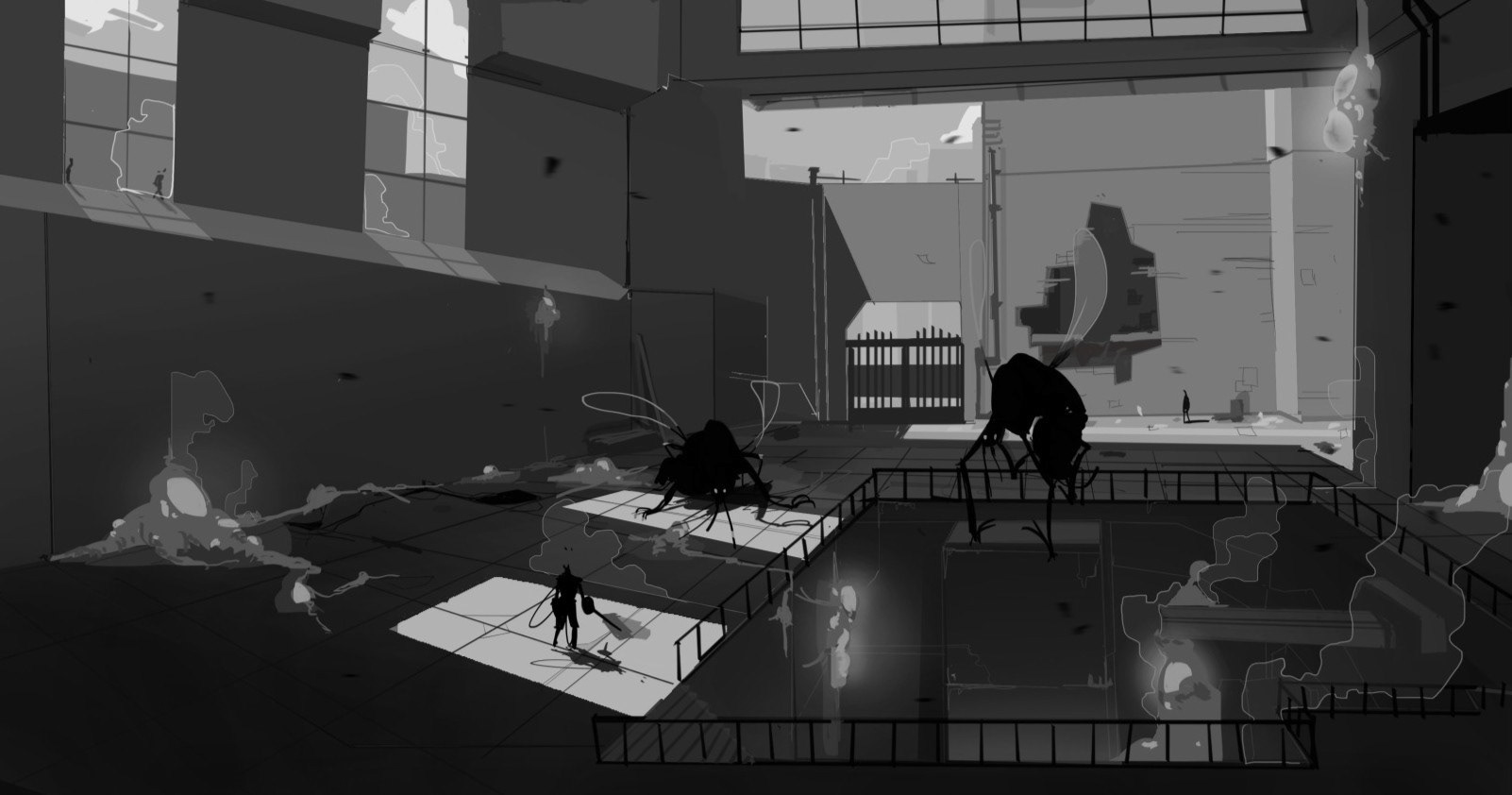
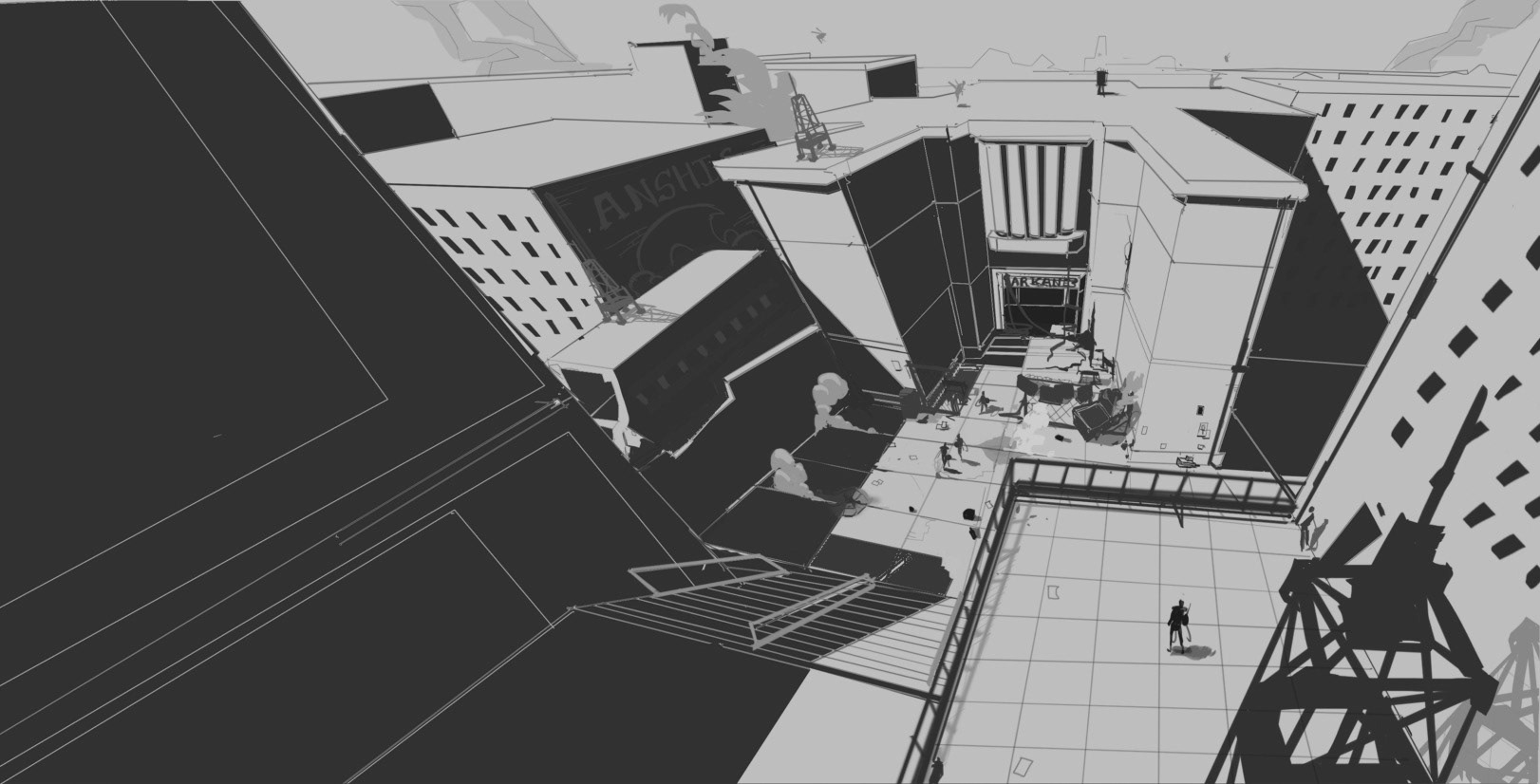
World Setting
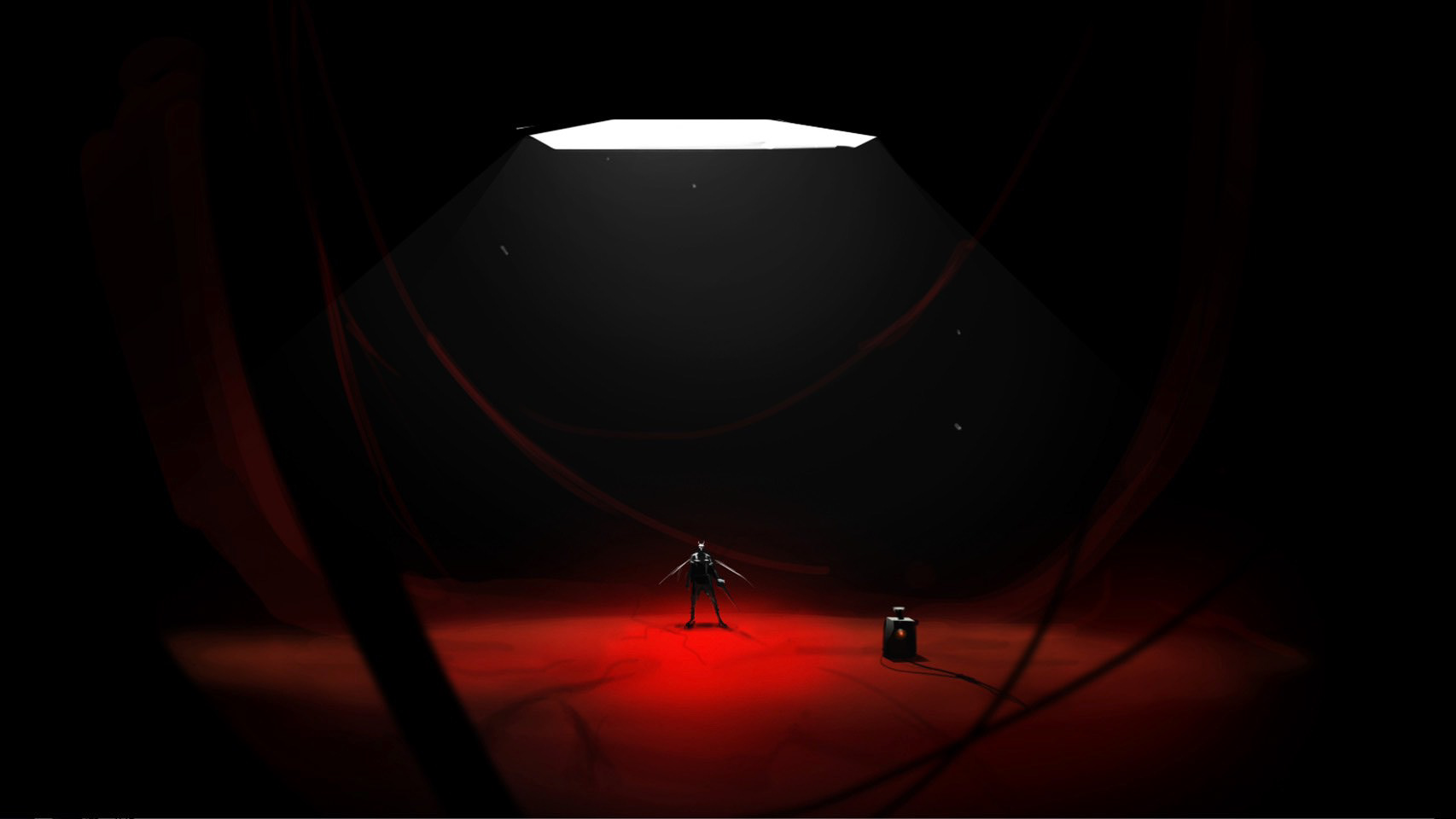
Humanity survives in a harsh world ruled by colossal monsters, where the surface has become nearly uninhabitable. Forced underground in search of resources, people discover a mysterious substance known as the Blood of the Earth, a blood-like liquid that becomes the foundation of civilization.
The royal city controls the underground reserves and monopolizes their distribution. While the nobility lives in abundance, ordinary citizens must work in exchange for limited access to food and the Blood of the Earth. The protagonist is a member of an expedition team responsible for extracting this precious resource for the crown.
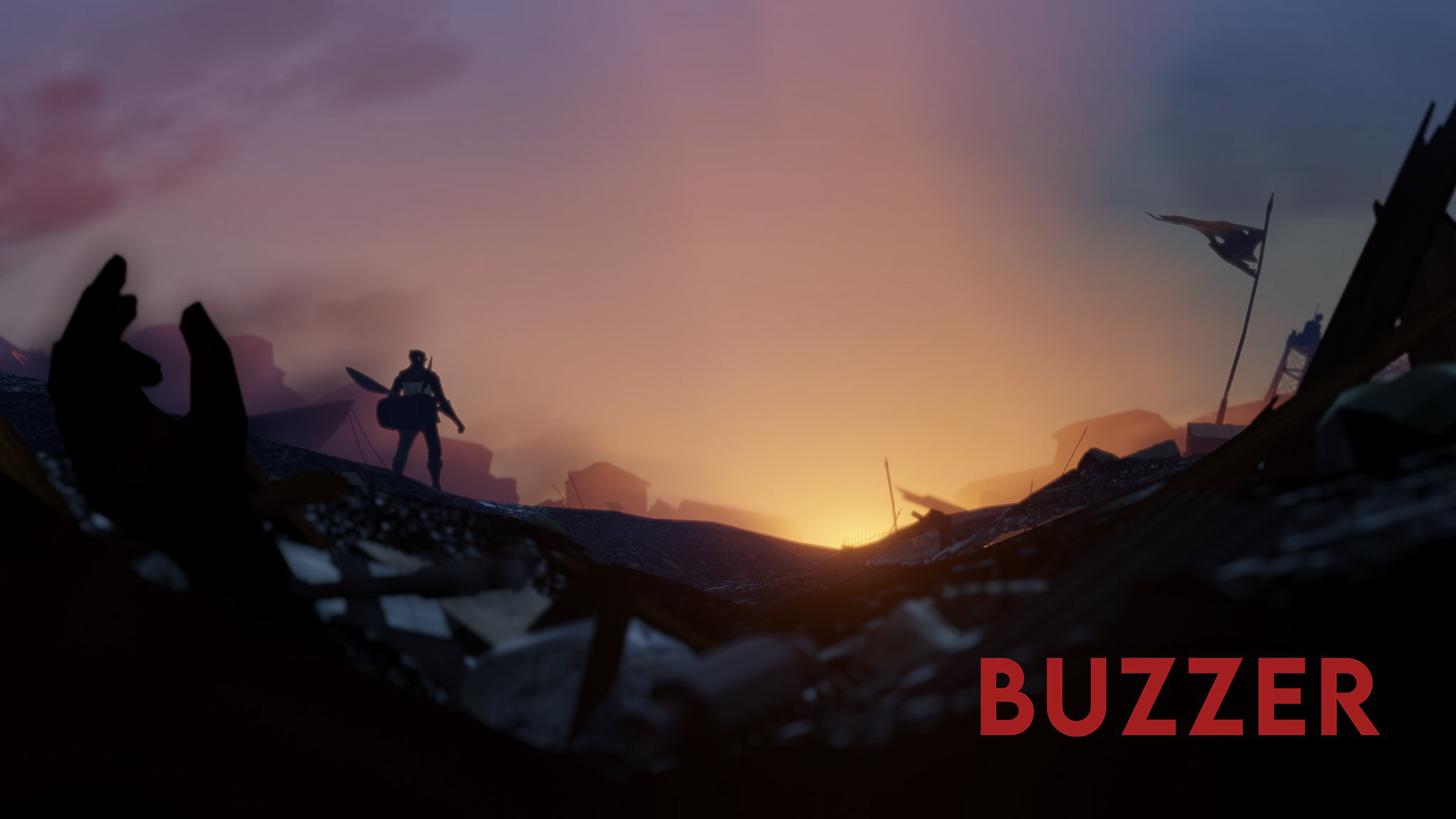
Visually, the world combines post-apocalyptic and steampunk influences. Once a prosperous civilization, it now stands in ruins after humanity chose to exploit a forbidden resource that was never meant to be disturbed.
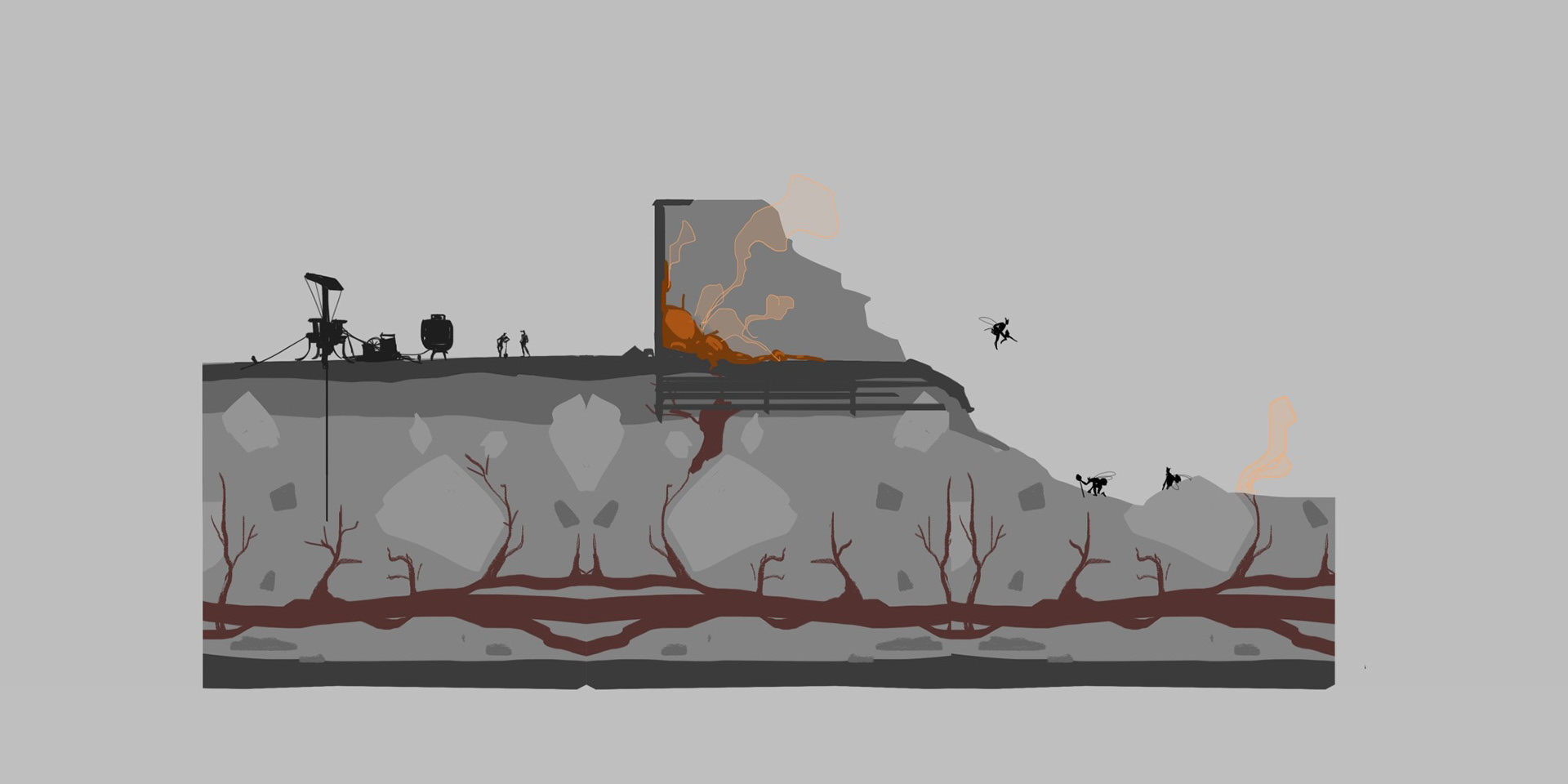
BLOOD OF THE EARTH
Blood of the Earth is a vital underground resource that cannot be fully harvested by machines, requiring human expeditions to venture deep beneath the surface. Its extraction attracts hostile creatures, making every expedition a constant battle for survival and forming the game's central conflict.
Conceptually, the Blood of the Earth serves as a metaphor for petroleum, reflecting humanity's self destructive dependence on finite resources and our willingness to exploit them despite knowing the consequences.
CITY RUINS & FLY VEHICLES
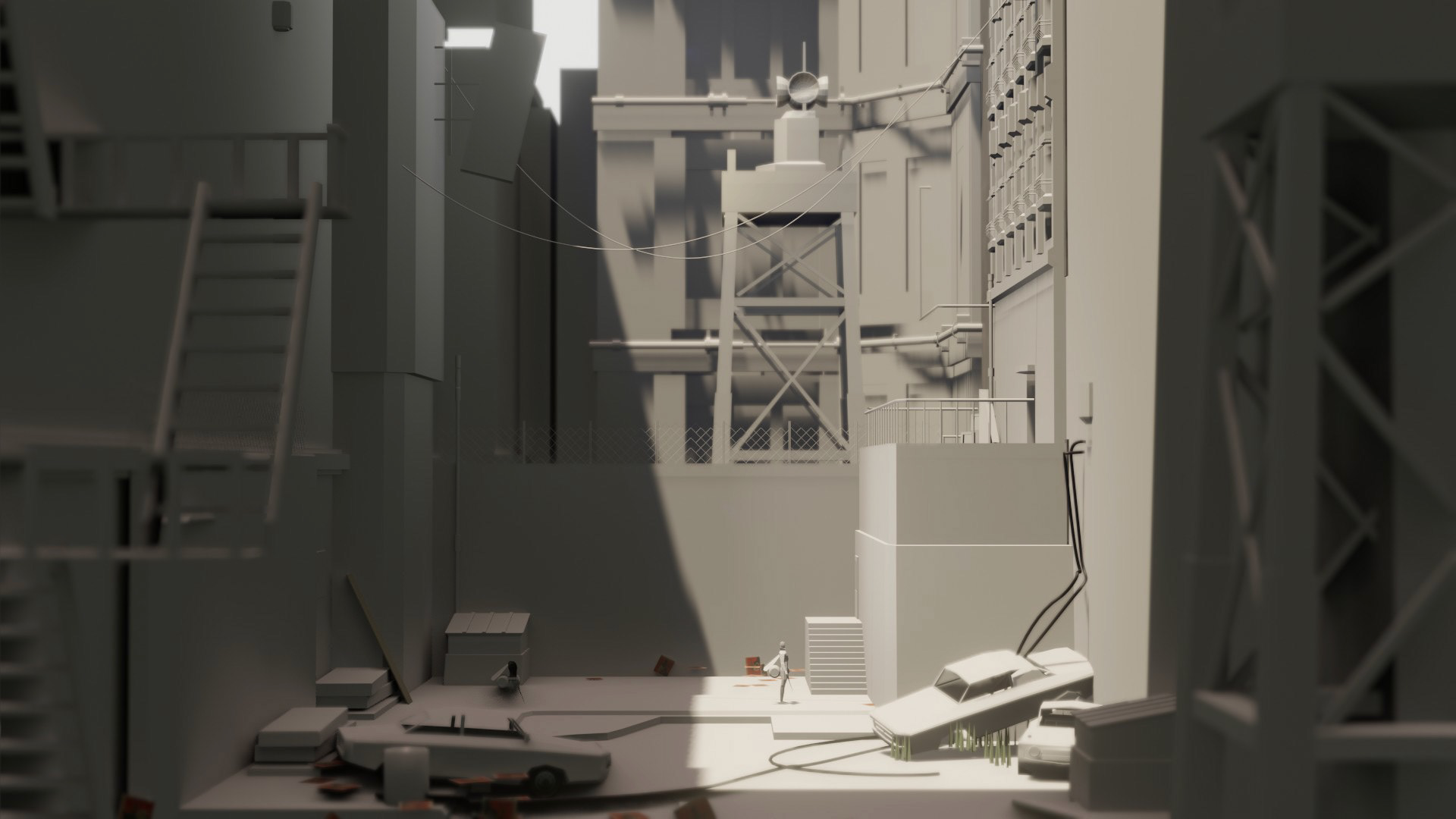
Following the collapse of civilization, cities were abandoned and gradually overrun by colossal monsters. Search teams continue to venture into these dangerous ruins in pursuit of valuable resources, inspiring the concept of fly like exploration vehicles designed to navigate hazardous urban environments.
During early development, we explored a narrative in which the world existed on the body of a giant. Every extraction of the Blood of the Earth awakened an immense shadow, later revealed to be the giant's hand descending from the sky. This mysterious force, known as the Great Black Sky, was ultimately removed due to its narrative complexity and production scope, though it played an important role in shaping the world's early direction.
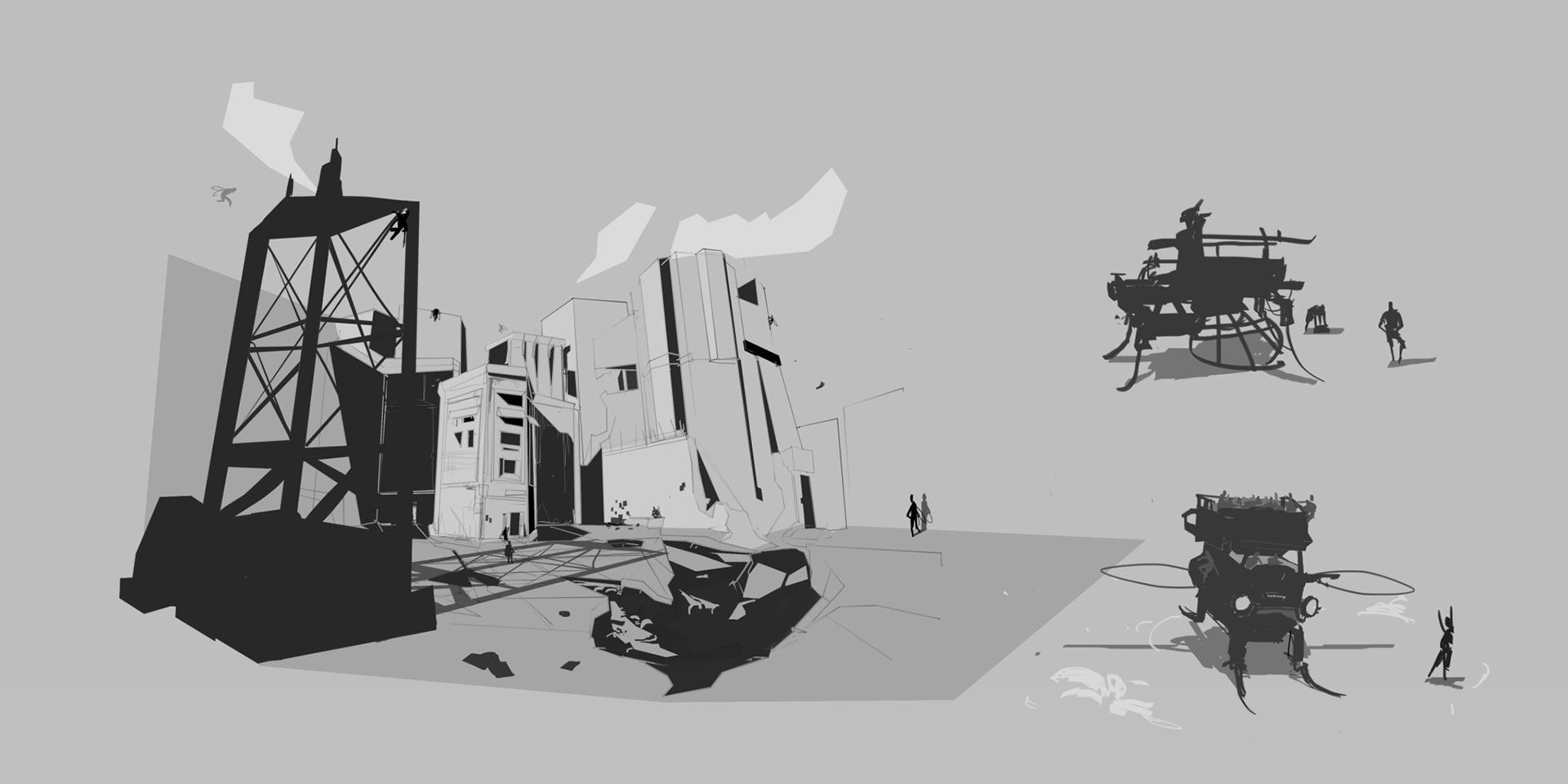
CONCEPT ART
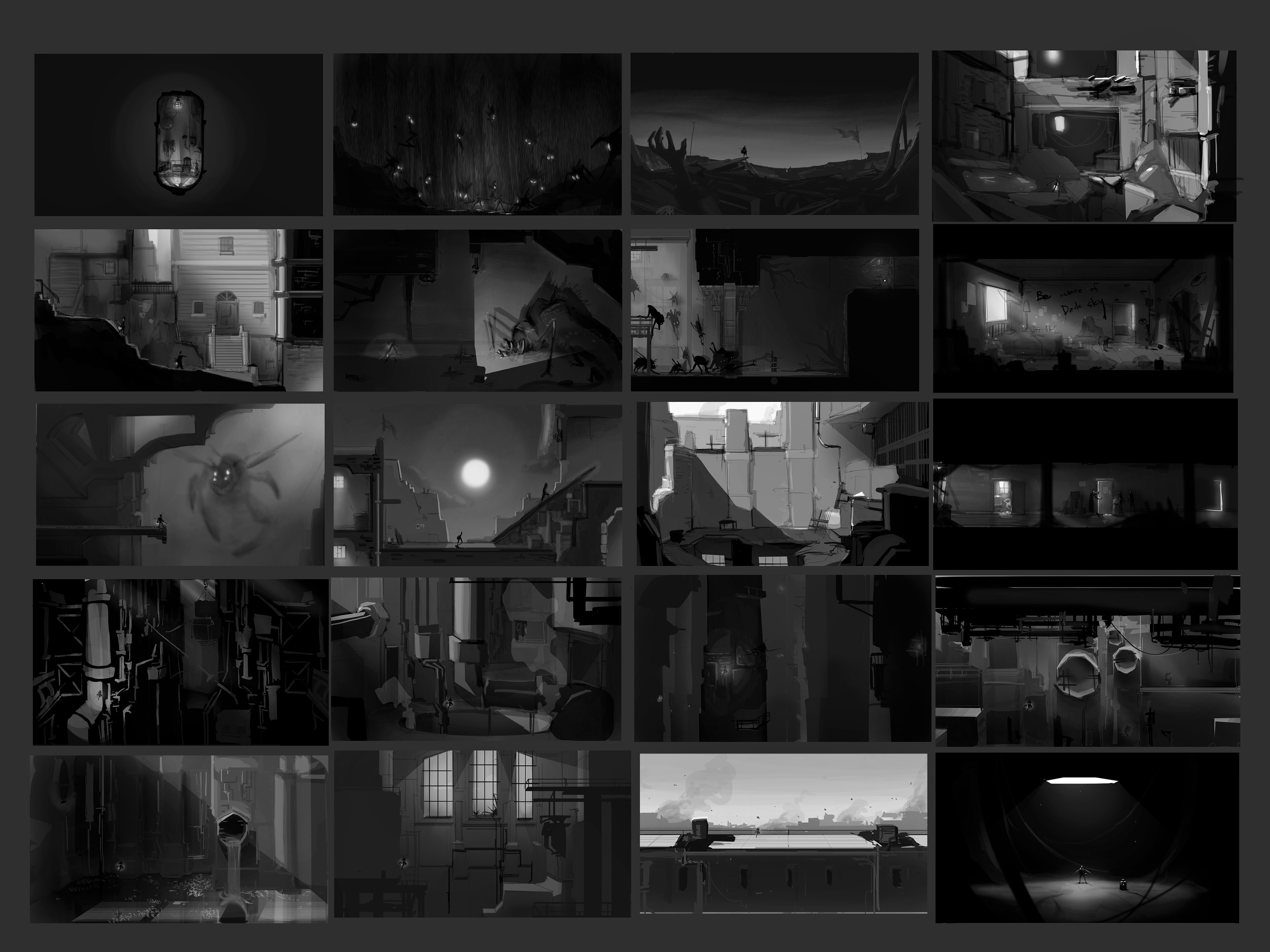
Concept art played a central role throughout the development of Buzzer. Rather than serving solely as visual exploration, it became a communication tool that aligned the team on gameplay, world-building, and character direction before production.
By rapidly iterating on ideas visually, we were able to evaluate concepts early, reduce ambiguity during discussions, and establish a shared vision across the team. This significantly improved production efficiency while minimizing unnecessary revisions later in development.
Beyond environments and architecture, concept art was also used to explore enemy behaviors, player interactions, and gameplay scenarios, allowing design and art to evolve together through visual iteration.
GAME LEVEL DESIGN
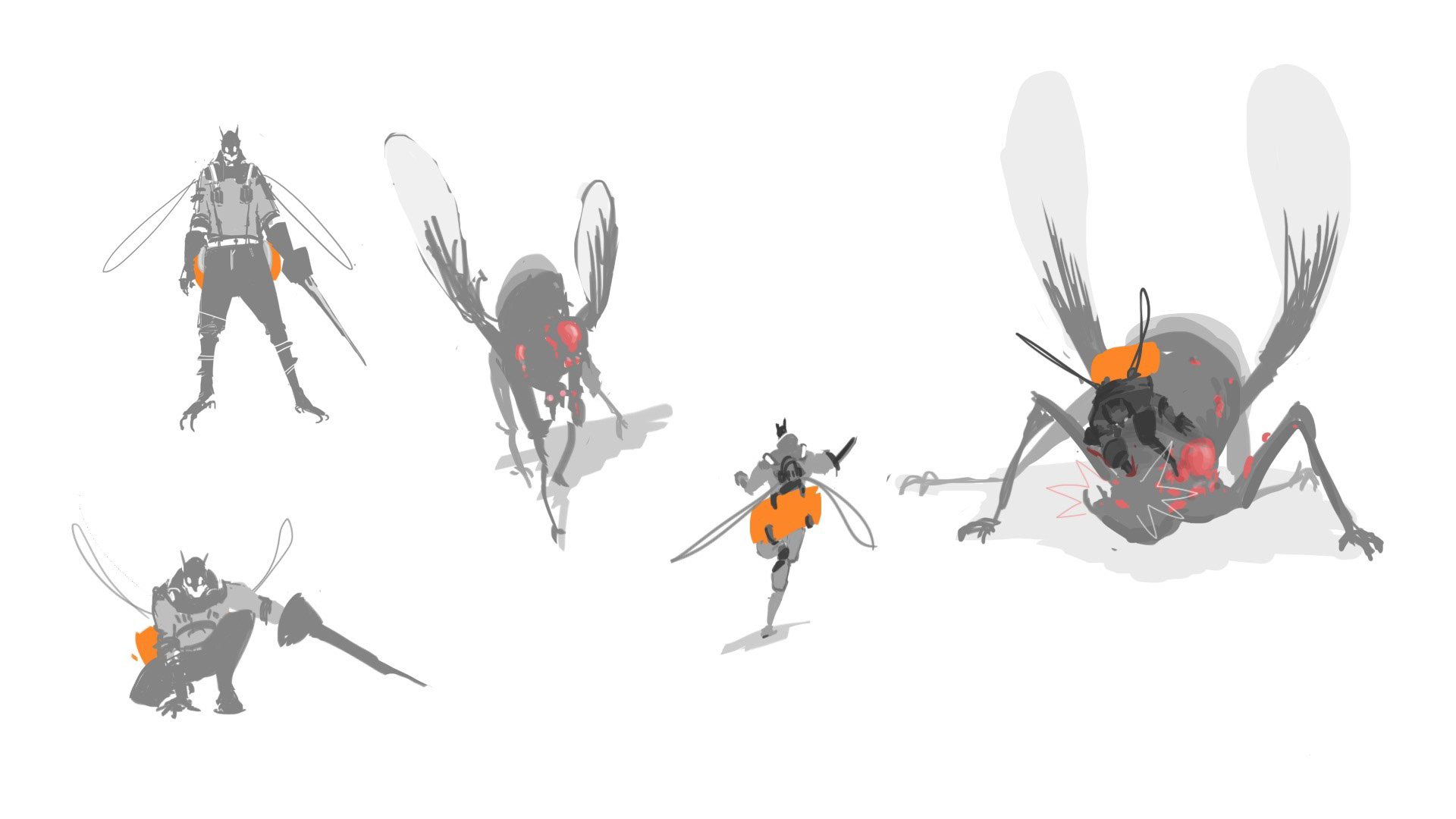
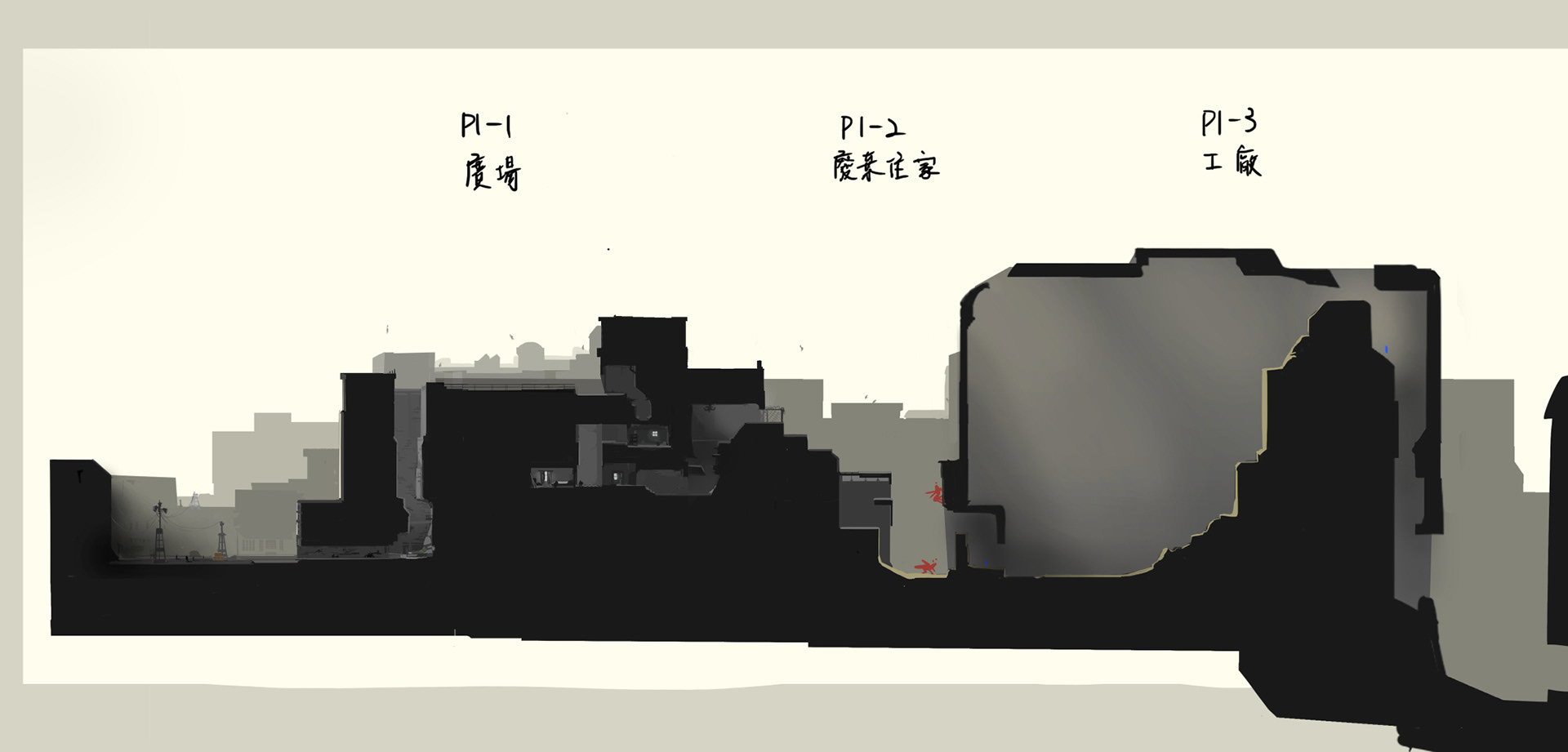
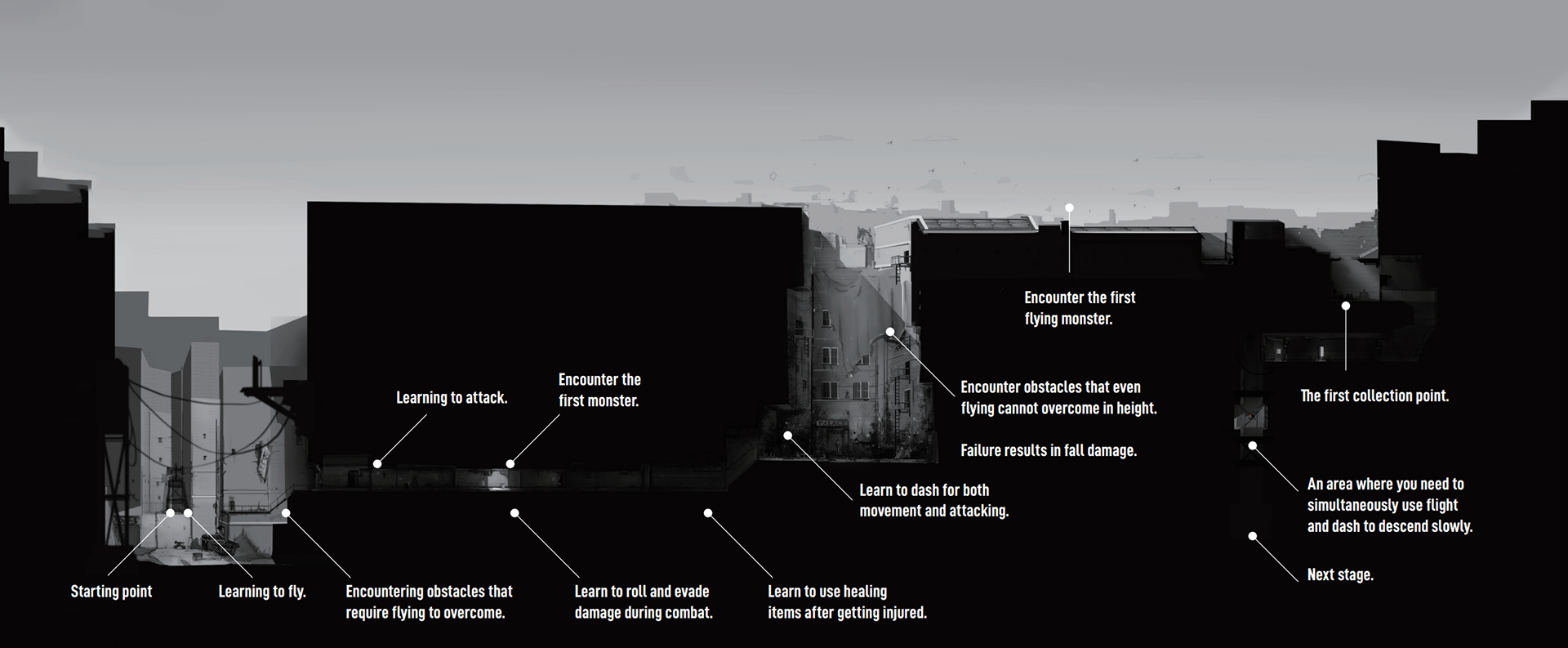
Once the core gameplay mechanics and player controls were established, we focused on designing the player journey rather than individual encounters. Instead of building levels directly in the engine, we leveraged our team's strong concept art capabilities to develop each stage through a storyboard-driven workflow.
Each level was planned as a sequence of visual beats, allowing us to define pacing, atmosphere, and environmental storytelling before entering production. This process gave the team a shared creative vision while making it easier to evaluate ideas and iterate on the overall player experience.
Although this approach required more concept development upfront, we deliberately prioritized visual exploration to ensure that gameplay, level flow, and art direction evolved together throughout production.
MONSTER DESIGN
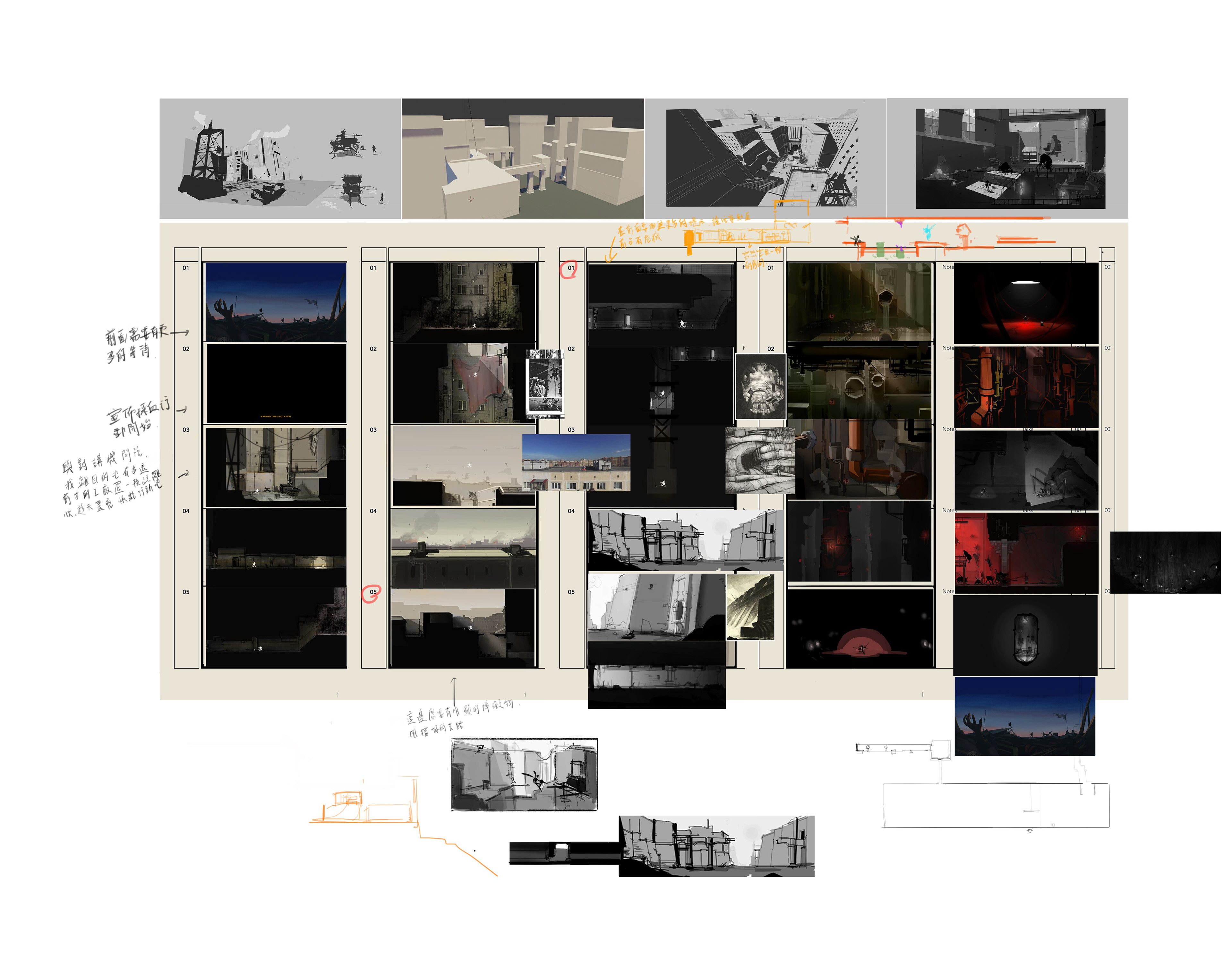
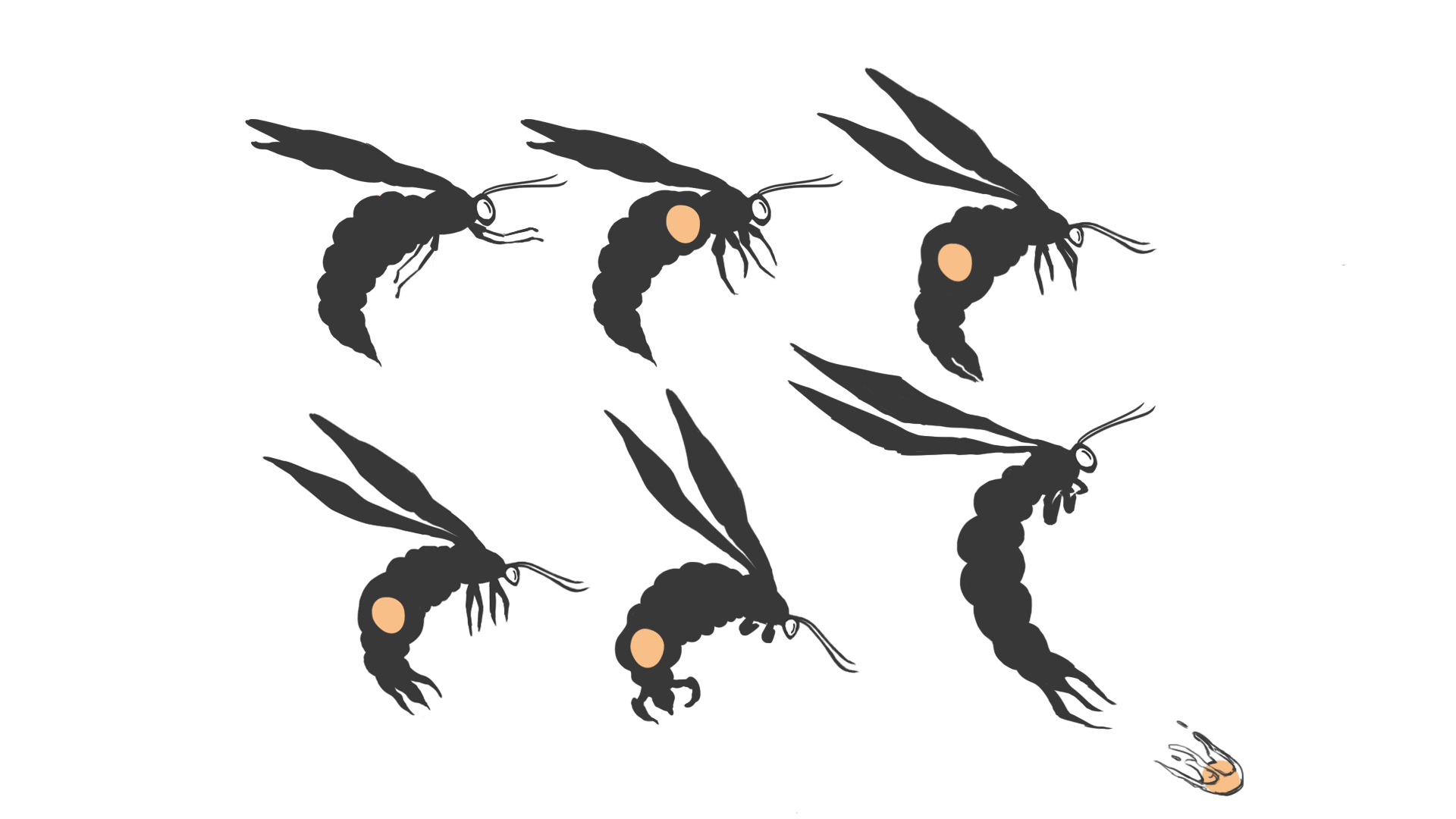
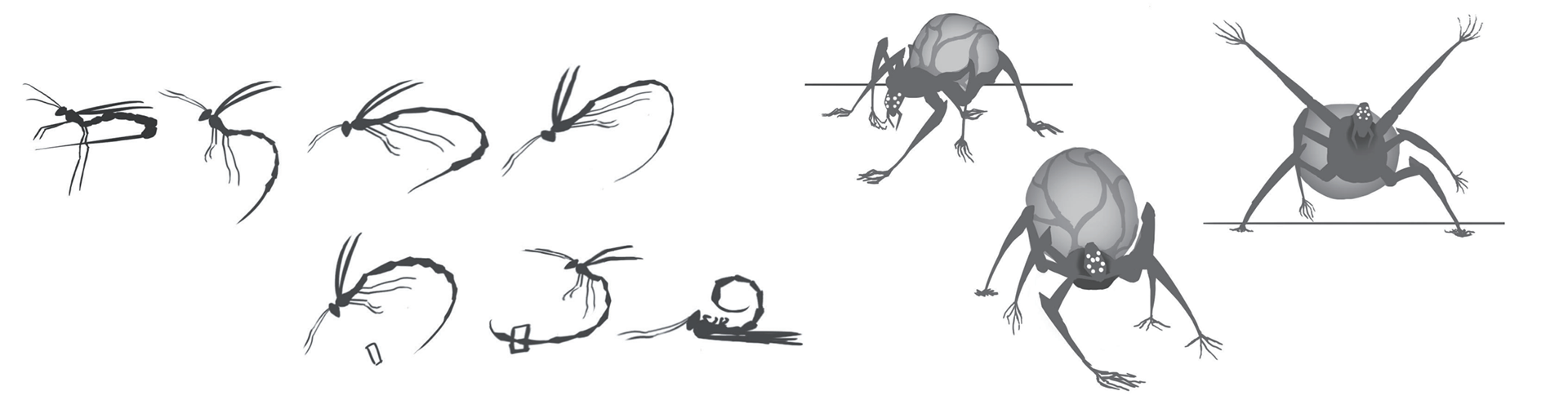
To reinforce the player's identity as a mosquito-like human, every enemy was designed with insect-inspired forms and behaviors. Rather than simply creating visually distinct creatures, each monster was developed to support the game's world, gameplay, and overall visual language.
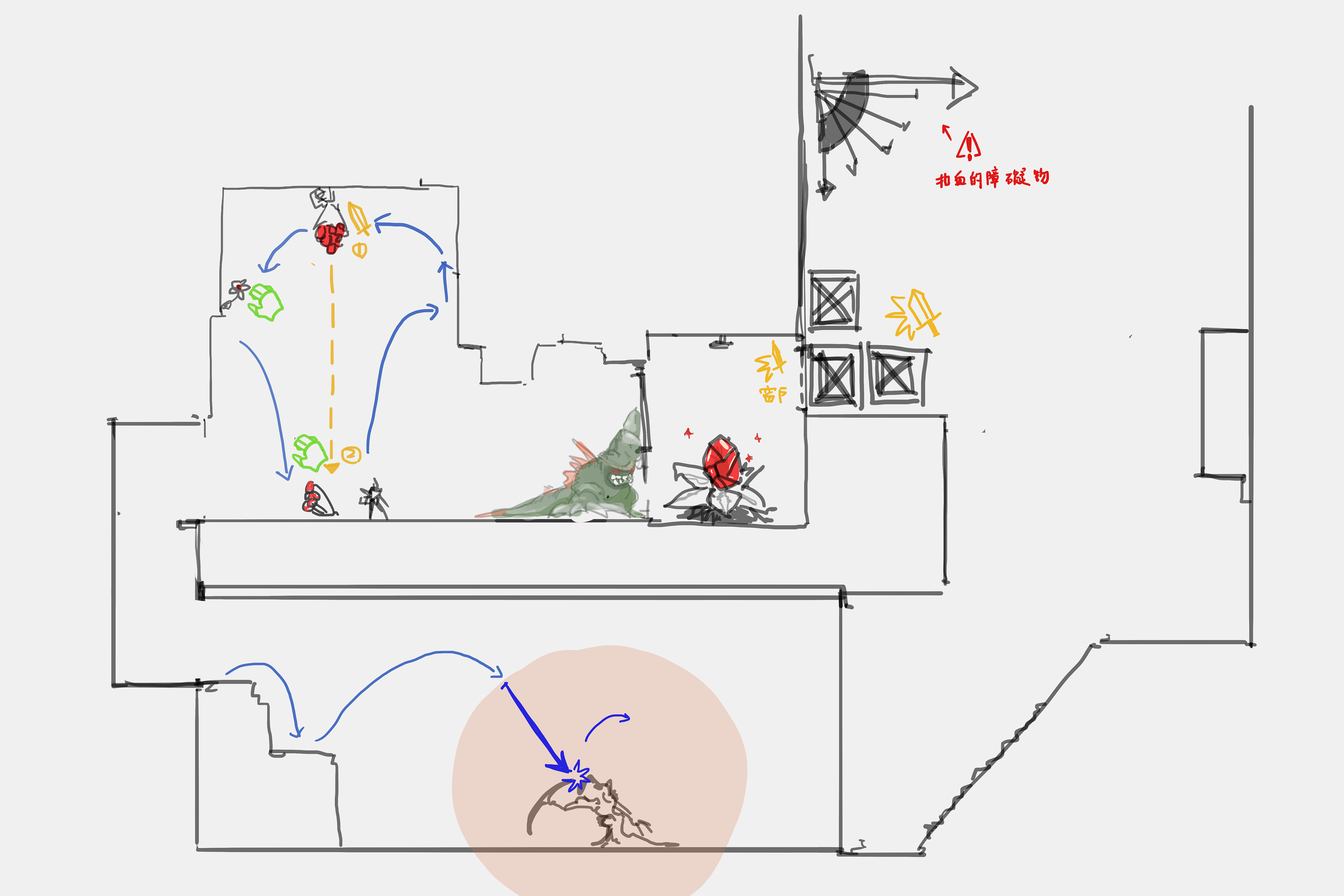
Our design process began with rapid silhouette exploration, allowing us to evaluate readability, movement, and personality before refining individual concepts. Enemy behaviors, attack patterns, and animations were considered alongside their visual design, ensuring that each creature communicated its gameplay role at first glance.
Because the early stages of the game focus on teaching core mechanics, early enemies were intentionally designed to appear approachable rather than overwhelmingly threatening. Each monster was tailored to support specific gameplay goals while gradually introducing new challenges throughout the player's progression.
GAMEPLAY DESIGN
Gameplay design evolved alongside the project's development. While the initial concept explored a stealth experience inspired by Metal Gear, the project eventually shifted toward action combat to better match the team's production scope and strengths.
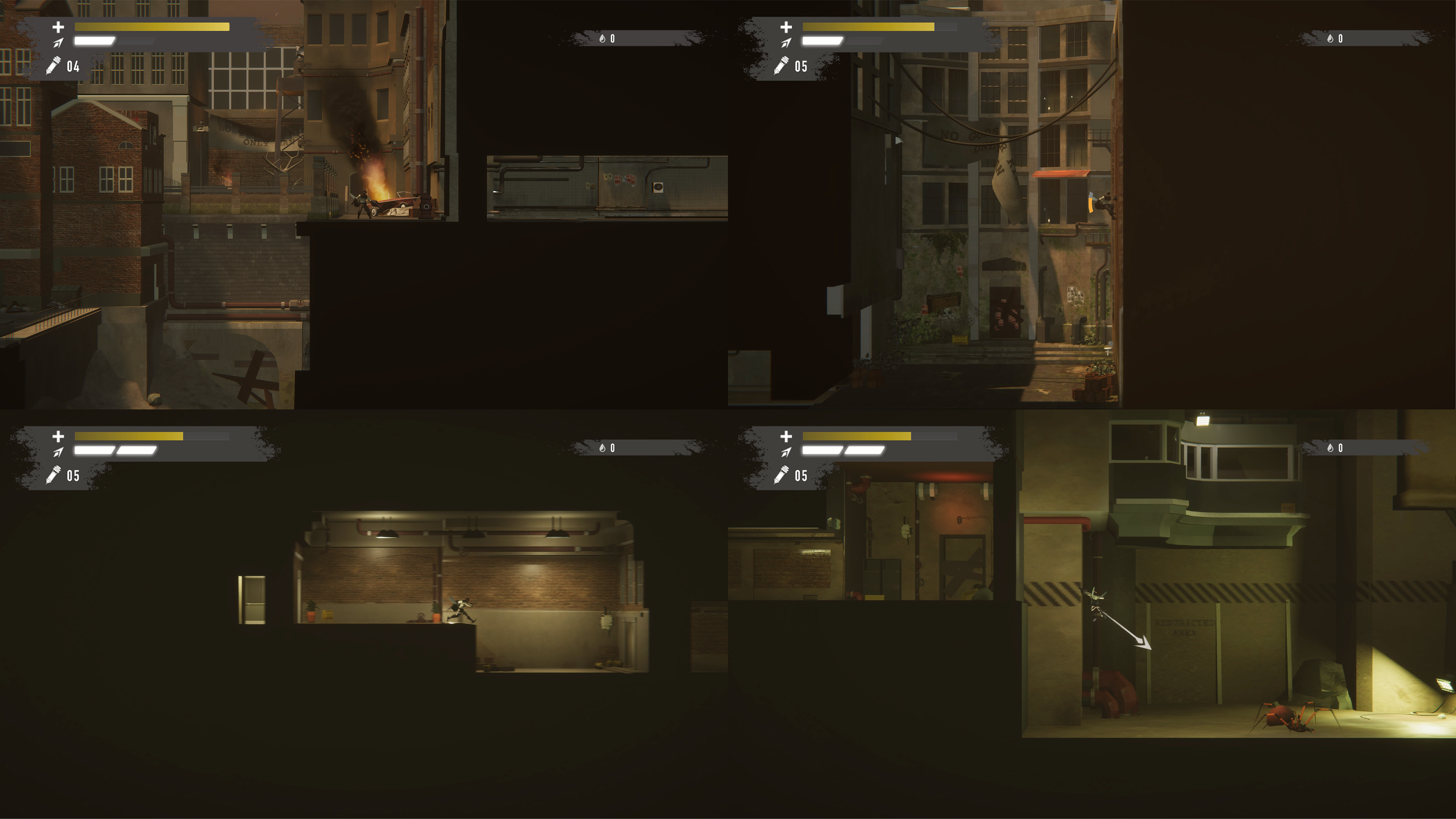
Our primary goal was to communicate the vulnerability of ordinary humans within this world. Enemy encounters, player movement, and environmental hazards were designed to create tension without becoming unfair. For example, flying introduced greater mobility but also exposed players to fall damage, encouraging thoughtful movement rather than unrestricted freedom.
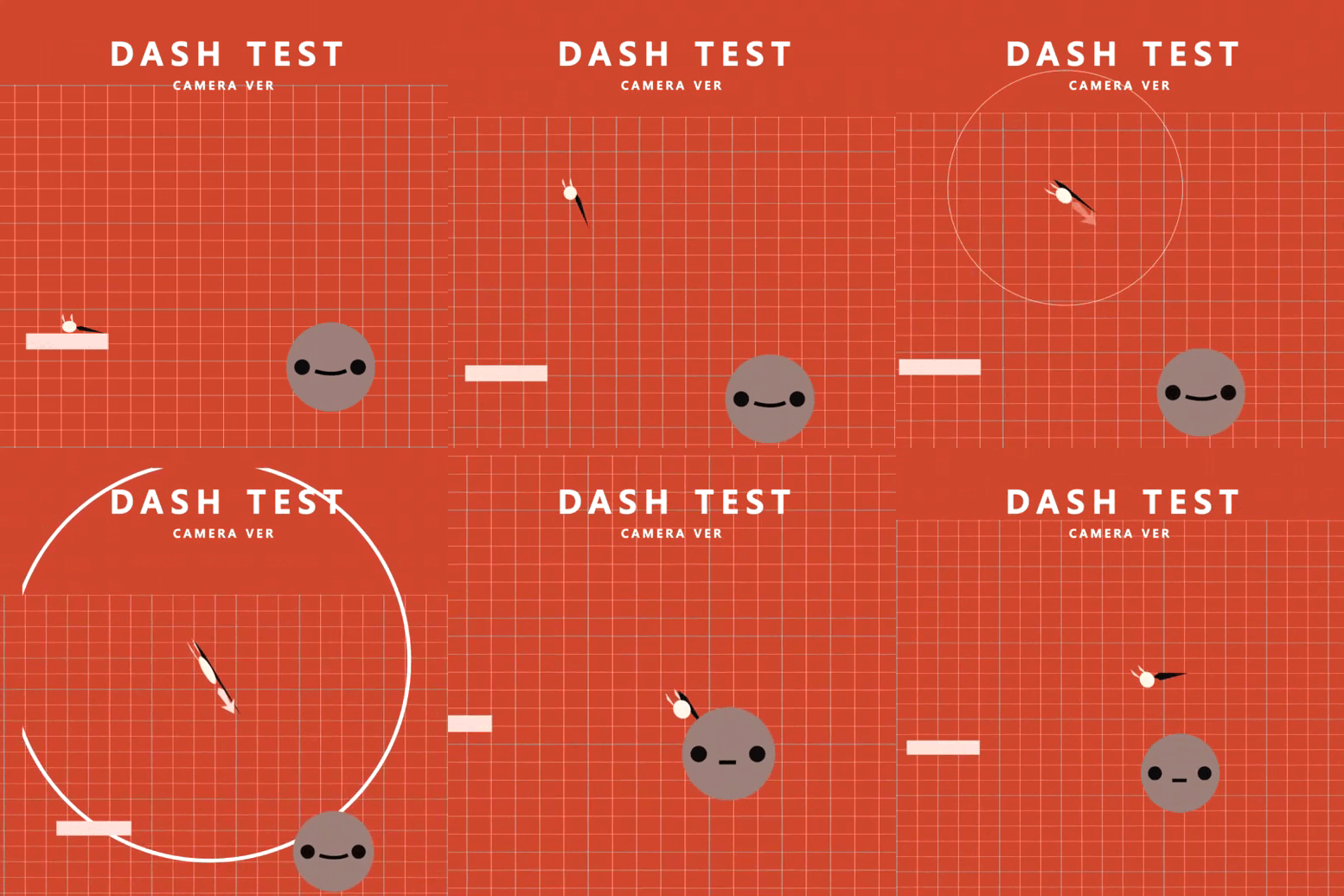
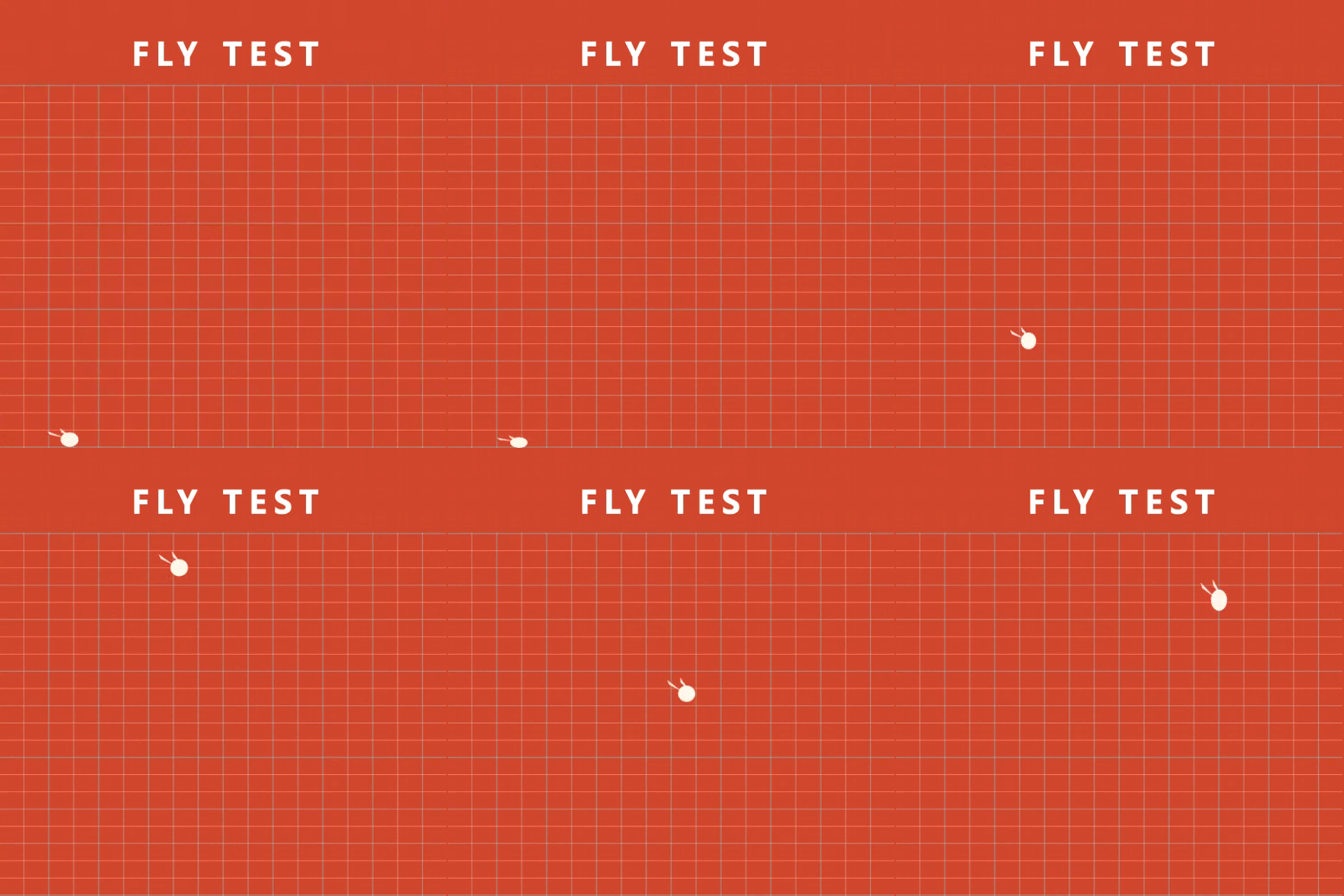
Developing gameplay required close collaboration between design, art, and programming. To improve communication and validate ideas early, we created simple animation prototypes that visualized player movement, combat timing, and the intended weight and responsiveness of the flight mechanic before full implementation.
Honors & awards
2021 Taiwan Vision Get Wild Awards - PC games category - Merit Award
2021 Taiwan Young Designers' Exhibition - Interaction Design category - Young Pin Design Award